Q7 Bang & Olufsenã‚â® 3d Advanced Sound System Review
Elvis has left the edifice. Seriously, despite the conspiracy theories that persist, like the moon landing in 1969, we are pretty sure it happened and that the King will not exist returning.
We all like to reminisce though, whether well-nigh rock and roll legends or our misspent childhoods and the cool cars nosotros used to lust after when we were yet out of range of commuter's licenses.
Now nosotros tin all concord - and are painfully aware to the point of boredom - that the EV era is upon the states and that suck-squeeze-bang-blow engines are on the style out.
Of the internal combustion engine options, diesel has arguably been the first victim to sustainability and regulation, but it still has not left the building.
Notwithstanding, information technology does seem plumbing fixtures to imagine that the V12 diesel in this Audi Q7'south engine bay is from another era, or another planet even, in the common cold light of day of the latter half of 2021.
Certainly, we have passed the point where such a motor volition exist produced again, especially with no hybrid engineering or batteries included to feign an interest in economy or emissions-reducing.
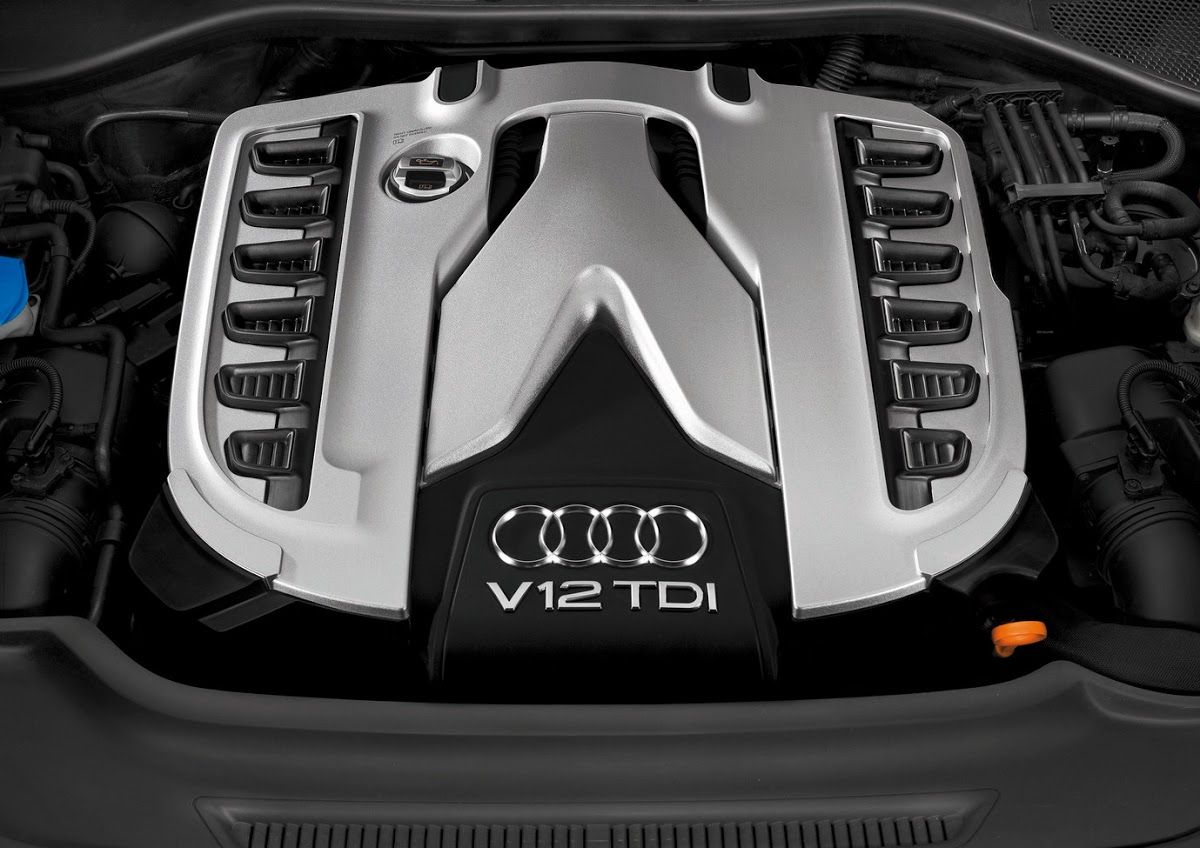
So, although it is probably one of the worst commercials for climate intendance and free energy conservation information technology might be time to reminisce on how this monster engine is a work of art in its own right – the largest diesel in a normal product machine with more torque on offering than a pocket-size-to-medium size European country.
Blindside For Your Buck V12 Power
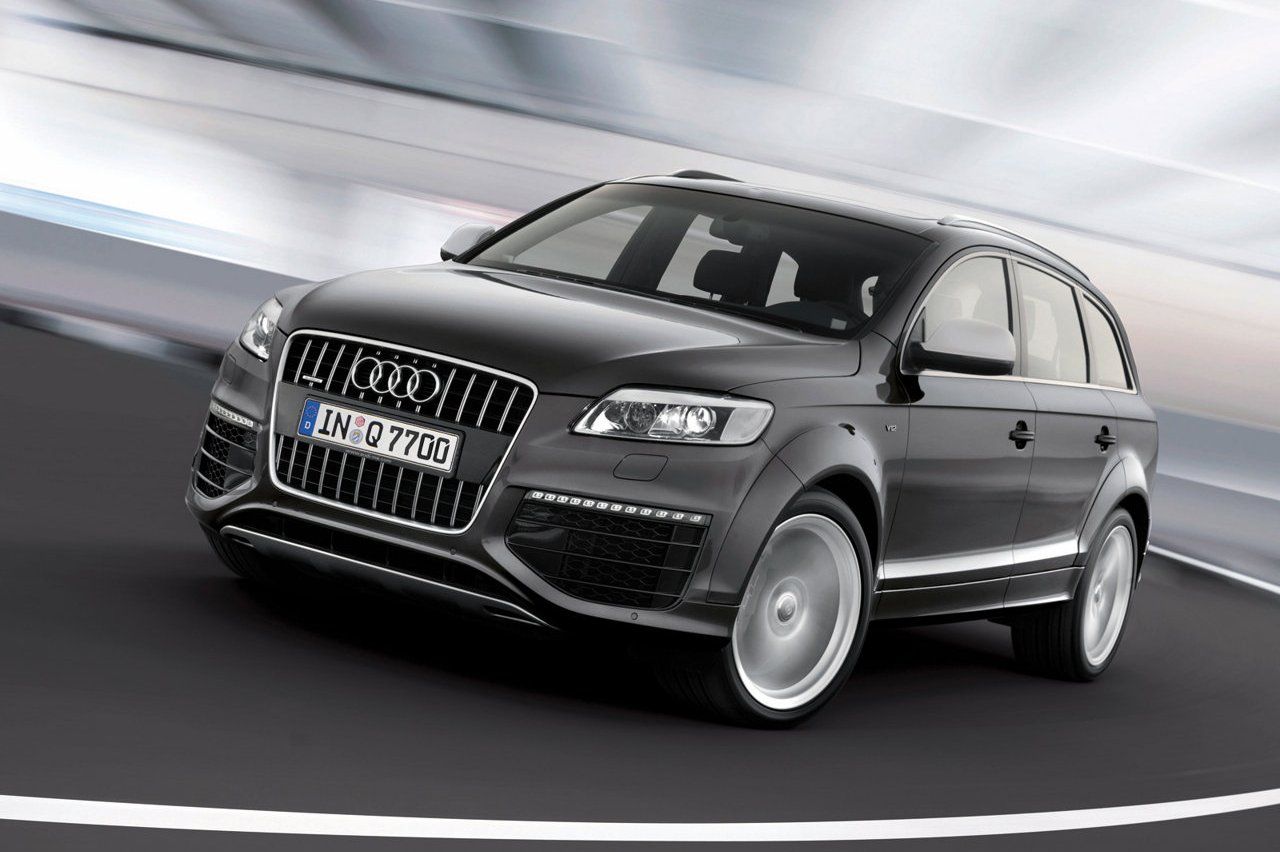
The Q7 which sprang forth around 2005 was big and imposing, relatively capable off and on-road, but virtually importantly had presence, premium badge kudos, and some torquey engines to provide expert straight-line performance for those over-taking maneuvers and tardily-to-the-meeting highway blasts.
Petrol engines were of the FSI season, which basically ways they were direct-injected and came in iii-liter turbo, a narrow 3.vi-liter V6, and a 4.2-liter V8.
The more ability the better equally the Q7 weighed in for at least 4900lbs and had a loftier, bluff forepart end.
For the 3.6-liter naturally aspirated V6 petrol we had 276hp and similar torque, which guaranteed an 8.5-2d 0-60mph dash. With the 4.2-liter V8 equipped and its 345hp (325lb-ft of torque), you could hustle the SUV to 60mph in a 2nd less.
Diesel variants, which suited the motorcar'south nature and purpose were offered in the 3-liter with 230hp merely 370lb-ft of torque initially, then, of form, the iv.2-liter V8 TDI.
It had 320hp and 561lbs-ft of torque, from a very depression 1800rpm, which is good if you are towing your house for example.
This was nothing though compared to the 6-liter 12-cylinder super diesel that was to come up.
A Promising Applied science
Earlier Audi decided to go actually big with its flagship diesel fuel there was already a choice of large engines for the Q7 – including the aforementioned 4.2-liter diesel in a V8 layout.
Initially confined to pocket-size displacements, the apprehensive diesel engine, in general, has gone from a crude-running 'econo-box' motor (for example in the 1976 VW Golf where the diesel engine debuted in a production car) to a large and capable unit in a relatively short amount of fourth dimension.
At the start of the 90s, diesel fuel engines were already smoothen and quick when coupled with a turbo and intercooler.
From the first-class XUD diesel engines in Peugeot and Citroen cars, available in up to 2.1-liter sizes, these would keep to spawn the efficient HDi engines eventually developed with Ford and as well used past BMW in the Mini.
Otto Cycle Machines
The diesels got bigger, with 3-liter units like the HDis in Peugeots and Citroens offer economy and speed with bags of torque and soon displacements increased to the point where we were seeing viii-cylinder engines engineered around compression-ignition technology, with the iii.3-liter V8 diesel fuel in the classic Audi A8 at the plough of the century.
In 2003 the VW group would release the 4.0-liter diesel fuel V8 with 275hp and in 2005 nosotros would get a iv.2-liter with up to 380hp.
Turbodiesel, much more popular in Europe than in the States, was both more often than not cheaper to fuel, cheaper to run, and had the trump card of being torquey and fast.
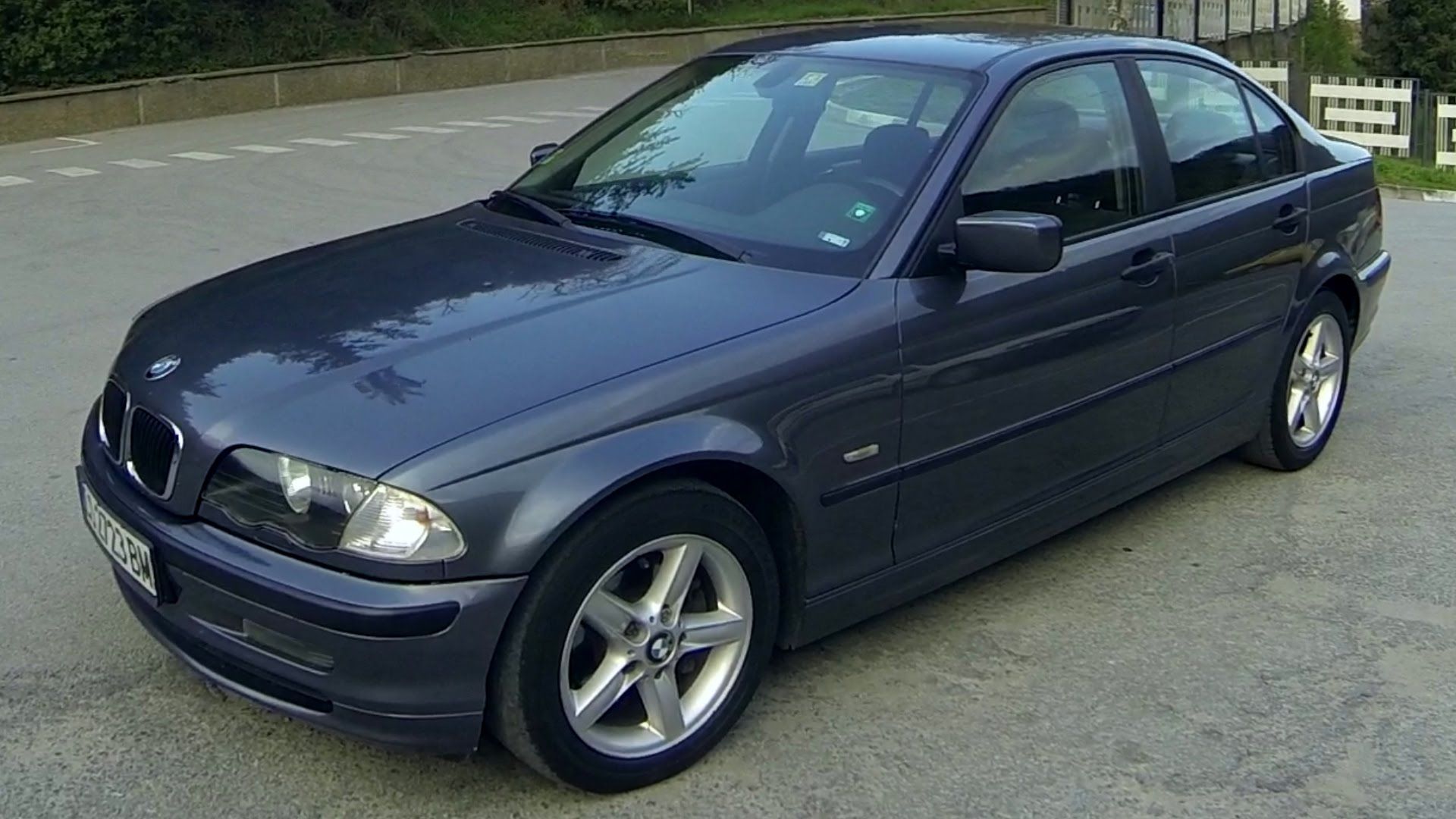
A BMW 320d for example would outrun an equivalent gasoline machine, fifty-fifty if the sound it made was not and then pleasing, but the key with diesel is the torque, just like in a dainty big American V8.
Le Mans Was To Give thanks For The vi.0-liter V12 TDI

From 2006 Audi had entered the mighty R10 TDI V12 race automobile into Le Mans and the machine dominated things, winning for a few years straight and in 36 out of 48 races overall, according to Wikipedia.
Unlike the 6.0-liter V12 in the Q7 from the same company, this had a 5.five-liter displacement merely made a suspected 640-700hp.
Information technology would have boasted relatively good fuel economy and amazing torque but was heavy compared to rival gasoline engines, only the car overall at 2000lbs looks impressive next to an ordinary Audi A3.
Either manner, the recipe seemed to work, and Audi knew this was a skilful showcase for the capability and reliability of its (Volkswagen Groups') common-rail direct-injection diesel fuel tech.
From 2008, crammed nether the hood of its uber-SUV the Q7, was a six.0-liter 'cousin' of the record-winning car, making 500hp and 740lb-ft of that all-important torque – incredibly all that torque was bachelor at even 1750rpm, which would have made for convincing pull in any situation.
This engine was a double-overhead camshaft, 4 valves-per-cylinder motor with 2 turbos.
If y'all wanted, you could imagine two 3-liter 6-cylinder turbo diesels with 250hp and 370lb-ft each, married together to create a monster engine, with carbon emissions to rival the biggest container ships.
It is the accented antonym to the XL1 hybrid super-diesel from Volkswagen with its 600cc TDI engine.
Now, this SUV is a curio for the curious, information technology will be at best coming upwardly to a decade old presently and might well be expensive to maintain and service.
These cars all the same consume a lot of fuel and are probable to have been driven hard, the pause and consumables will have taken a chirapsia and it'south not exactly good for the planet or your city.
Still, if in that location'southward an unlikely car hero that we would want to accept for a smash, just for the engine – and while we however tin - this would exist on the list.
Most The Author

Source: https://www.hotcars.com/audi-q7-v12-is-the-pinnacle-of-the-dirty-torquey-diesel-era/
0 Response to "Q7 Bang & Olufsenã‚â® 3d Advanced Sound System Review"
Post a Comment